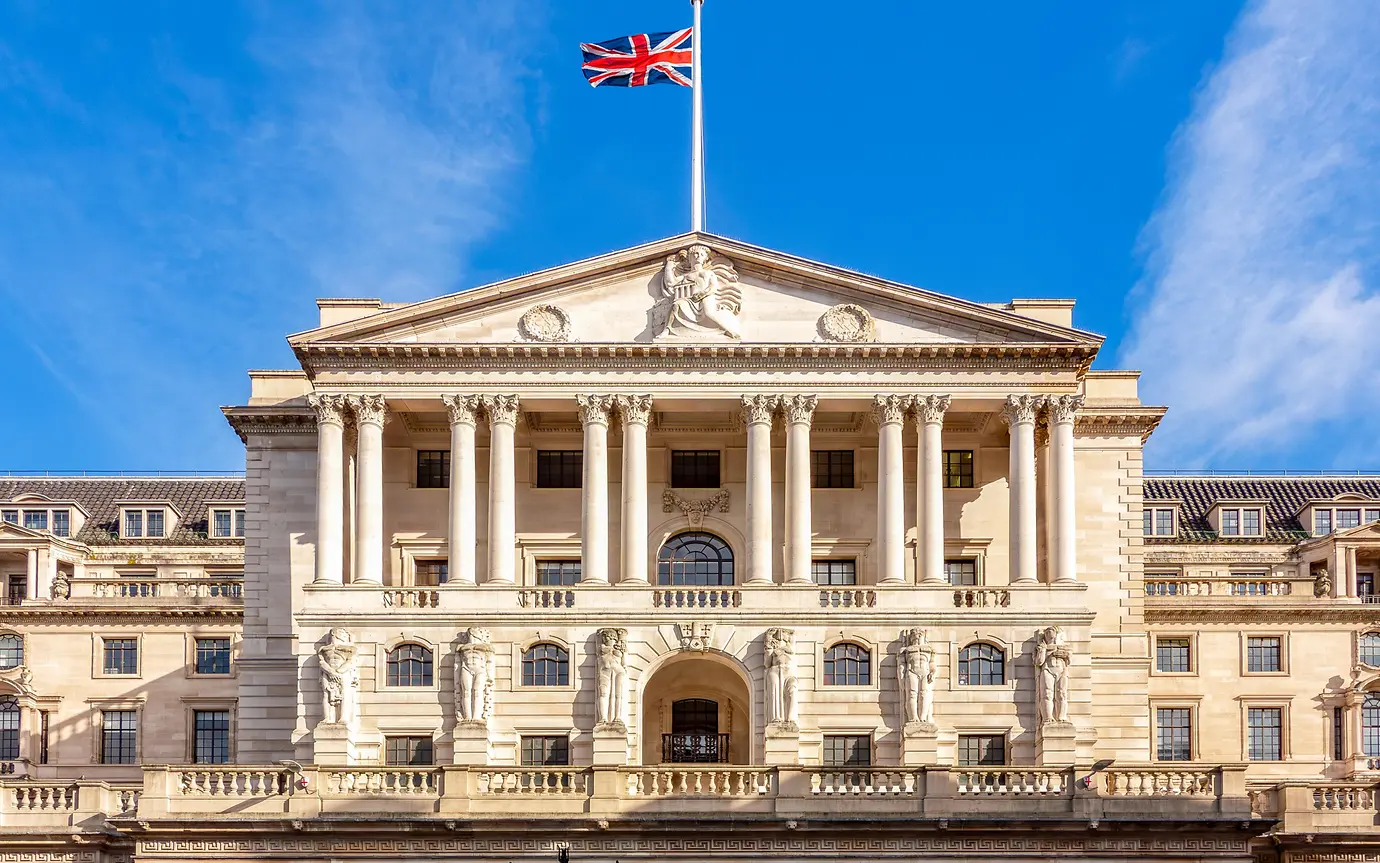
After several quarters of elevated inflation, the UK is now transitioning into a new phase. Although headline inflation has eased more rapidly than expected to 3.2%, underlying pressures remain high, and the Bank of England (BoE) faces difficult trade-offs in calibrating future moves.
In November, the BoE deviated from its quarterly cutting cycle, keeping rates steady but signalling that future cuts were likely. At that time, several members highlighted persistent inflation concerns as a reason for voting to keep rates unchanged, while the much-hyped November budget added uncertainty. At the previous budget in October 2024, Chancellor Rachel Reeves introduced controversial increases to National Insurance Contributions (NICs), which had an inflationary impact, particularly on food and drink prices, as supermarkets passed on the higher costs.
In the latest budget, measures such as capping fuel duty, cutting energy prices and freezing rail fares will likely reduce inflation next year,1 underscoring the government’s caution about policies that could keep prices elevated. As inflation and fiscal risks eased, on 18 December, the BoE lowered rates by 0.25% to 3.75% in a 5-4 vote, with Governor Andrew Bailey casting the deciding vote.
Markets gained further insight into inflation’s trajectory this week with the release of unemployment and wage figures alongside the latest inflation numbers.
The UK unemployment figures show a sluggish labour market but only moderately softer wage growth. The unemployment rate rose to 5.1% for the three months to October, higher than the previous three-month period, according to the Office for National Statistics. The number of people out of work in the UK is now at the highest level since January 2021, just below the pandemic peak.2
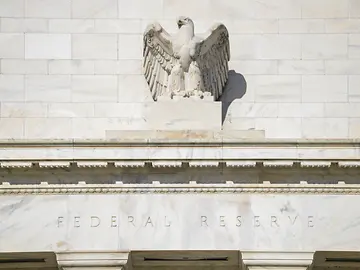
Meanwhile, inflation continues to drift lower, reinforcing the BoE’s view that it is on track for a gradual return to its 2% target. Unlike the Federal Reserve (Fed), which has a dual mandate of achieving maximum employment and keeping inflation at 2%, the BoE’s sole focus is inflation.
Market expectations for the Fed’s future path are varied, particularly following Chairman Jerome Powell’s recent comments: “I would note that having reduced our policy rate by 0.75% since September, and 1.75% since last September, the Fed funds rate is now within a broad range of estimates of its neutral value and we are well positioned to see how the economy evolves.”3 The BoE, with its latest reduction to 3.75%, has signalled it is also nearing its neutral rate, although at the most recent meeting, committee members disagreed on how exactly to work out the “right” neutral rate – the level that neither stimulates nor slows the economy. Without new economic shocks, decisions about whether to cut rates further will be more finely balanced for each member. This is partly because there is simply less room to cut rates much more, based on current estimates of the neutral level. BoE members remain wary of cutting too much too fast and then having to reverse course, as this could damage the central bank’s credibility.4
This indicates that many developed market central banks are seeing limited scope for further reductions in interest rates, unless the economy faces significant headwinds.
Japan is taking a different path. Inflation has been sticky around 3% in recent months and has remained above-target for over three years. Rising borrowing costs and a weak currency have added pressure. As such, on 19 December, the Bank of Japan (BoJ) raised interest rates to 0.75%, the highest level in 30 years. However, concerns persist that Prime Minister Sanae Takaichi’s fiscal policy and increased government borrowing will continue to weigh on the yen and government bonds. Markets will closely watch currency and debt trends in the coming months.5
The European Central Bank (ECB) has shifted tone. Recent hawkish comments and an improving economic outlook have swung expectations from gradual easing to rates being held steady, to potential rate hikes in late 2026. European government bond yields moved sharply from the start of the month as a result. However, at its 18 December meeting, the central bank said it was not pre-committing to a particular rate path and would remain data dependent. Given the degree of uncertainty facing Europe and global markets more generally, the ECB “simply cannot provide forward guidance,” President Christine Lagarde said during the press conference.
Taken together, these developments suggest we may be entering the final innings of the rate-cutting cycle in the West. With central banks increasingly cautious and data-dependent, the pace and extent of further easing in 2026 will hinge on how quickly inflation returns to target and how resilient labour markets and growth prove to be. Each central bank will respond to its own inflation dynamics, labour market data and fiscal backdrop, meaning we could see a shift from cuts to hikes over 2026. This reinforces the need for an active approach to government bond allocations that can adjust as the policy landscape evolves.
As we pause The Brief until the new year, I would like to take this opportunity to wish you all a Merry Christmas and a very prosperous 2026!
[1] Budget could knock half a percentage point off inflation, Bank chief says - BBC News
[2] UK unemployment rate rises slightly to 5.1% - BBC News
[3] Transcript of Chair Powell’s Press Conference December 10, 2025
[4] Bank Rate reduced to 3.75% - December 2025 Monetary Policy Summary and Minutes | Bank of England
[5] Bank of Japan expected to hike interest rates | The Straits Times
LGT Wealth Management UK LLP is authorised and regulated by the Financial Conduct Authority Registered in England and Wales: OC329392. Registered office: 14 Cornhill, London, EC3V 3NR. LGT Wealth Management Limited is authorised and regulated by the Financial Conduct Authority. Registered in Scotland number SC317950 at Capital Square, 58 Morrison Street, Edinburgh, EH3 8BP. LGT Wealth Management Jersey Limited is incorporated in Jersey and is regulated by the Jersey Financial Services Commission in the conduct of Investment Business and Funds Service Business: 102243. Registered office: Sir Walter Raleigh House, 48-50 Esplanade, St Helier, Jersey JE2 3QB. LGT Wealth Management (CI) Limited is registered in Jersey and is regulated by the Jersey Financial Services Commission: 5769. Registered Office: at Sir Walter Raleigh House, 48 – 50 Esplanade, St Helier, Jersey JE2 3QB. LGT Wealth Management US Limited is authorised and regulated by the Financial Conduct Authority and is a Registered Investment Adviser with the US Securities & Exchange Commission (“SEC”). Registered in England and Wales: 06455240. Registered Office: 14 Cornhill, London, EC3V 3NR.
This communication is provided for information purposes only. The information presented is not intended and should not be construed as an offer, solicitation, recommendation or advice to buy and/or sell any specific investments or participate in any investment (or other) strategy and should not be construed as such. The views expressed in this publication do not necessarily reflect the views of LGT Wealth Management US Limited as a whole or any part thereof. Although the information is based on data which LGT Wealth Management US Limited considers reliable, no representation or warranty (express or otherwise) is given as to the accuracy or completeness of the information contained in this Publication, and LGT Wealth Management US Limited and its employees accept no liability for the consequences of acting upon the information contained herein. Information about potential tax benefits is based on our understanding of current tax law and practice and may be subject to change. The tax treatment depends on the individual circumstances of each individual and may be subject to change in the future.
All investments involve risk and may lose value. Your capital is always at risk. Any investor should be aware that past performance is not an indication of future performance, and that the value of investments and the income derived from them may fluctuate, and they may not receive back the amount they originally invested.