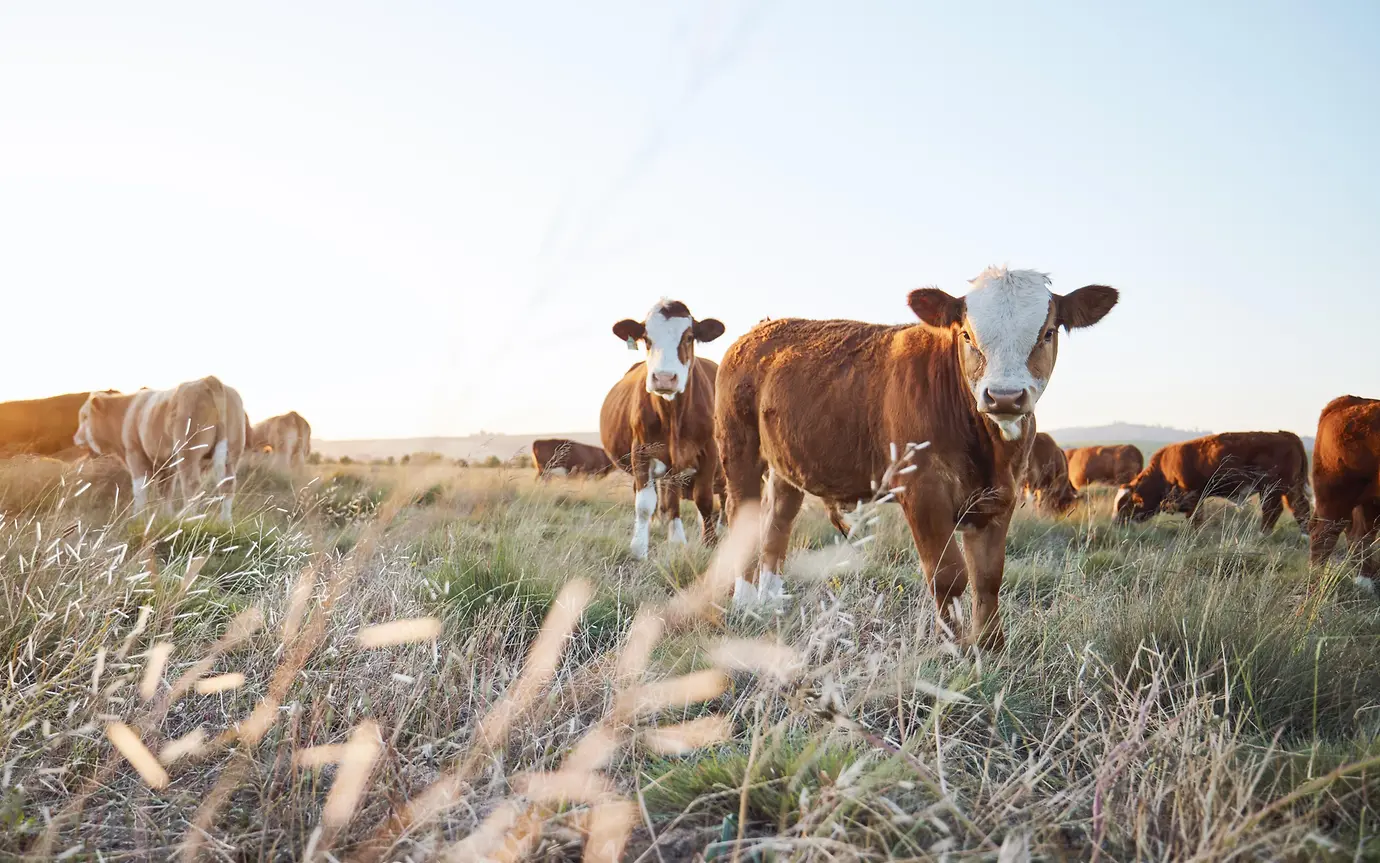
The global food system is closely connected to many of the challenges shaping today’s world. From climate and biodiversity to public health, the way food is produced, distributed and consumed has far-reaching consequences. Few systems illustrate more clearly how environmental, social and financial pressures are increasingly intertwined.
Recent years have exposed how vulnerable food systems can be, as climate volatility, geopolitical events and shifting trade dynamics have placed increasing pressure across the system. Agricultural production relies on energy, fertiliser, water and labour. It then depends on processing capacity, transport networks, trade routes and affordable access for consumers. A disruption in any one of these areas, such as the near-total closure of the Strait of Hormuz in 2026, can spread quickly through the system, leading to pressures on costs, availability and food security. The challenge, therefore, is not simply to produce more food, but to build systems that can adapt under pressure while supporting the environmental and human systems on which they depend.
Soil health, water systems and biodiversity are vital forms of natural infrastructure that underpin long-term agricultural productivity. Soil structure affects water retention and nutrient cycling, biodiversity supports functioning ecosystems and reliable water is essential to farming and processing. When these systems deteriorate, so too does the ability of food systems to withstand shocks over time.
This is why regenerative farming is attracting growing attention, from farmers to supermarkets. Practices such as wider crop rotation, reduced soil disturbance, cover cropping and, where appropriate, integrating livestock, can work to restore the health of land while maintaining production.
The transition to regenerative practices, however, is not straightforward as farmers and growers must contend with factors including shifting climate conditions, input costs and market prices. Adopting new practices can require experimentation and investment before long-term benefits become visible, and change is more likely to be viable when the economics are credible and the risks manageable.
Building stronger and more adaptable food systems requires long-term capital to support innovation, infrastructure and the adoption of new approaches across the full value chain, as well as the scaling and delivery of technical solutions over the long term.
For investors, the opportunity extends beyond farming, encompassing agricultural equipment, land management, crop science, irrigation, logistics, robotics and technologies that help improve resource efficiency. One such example is AI-enabled pest detection systems, which can identify insect threats earlier, enabling more targeted interventions and reducing blanket pesticide use. Similarly, robotics and automation can support precision farming and help address labour constraints, while crop innovation can improve resilience to drought and disease. The value of these tools lies not in technology for its own sake, but in their ability to solve practical challenges. Data and AI can support better decision-making across supply chains, improving efficiency, reducing waste and strengthening long-term stability, with commercial benefits for companies and investors.
As ever, turning promising ideas into widely used solutions takes time. Upfront costs, regulation, infrastructure constraints and the challenge of integrating new technologies into existing supply chains can all slow adoption. Long-term capital can therefore play an important role in helping viable approaches move from early-stage innovation to wider use.
Download the report to explore the trends shaping investment risks and opportunities, and how they influence our approach to investing, stewardship and business operations.
The future of food is not a narrow investment theme, but a long-term transition requiring innovation across a wide range of sectors. This transition is creating opportunities to support and scale solutions that make food production and distribution more efficient, reliable and resource-conscious, while helping to sustain healthier, more resilient natural systems.
The long-term viability of these solutions will depend on their ability to meet practical needs and be adopted across complex food supply chains, with this process supported by collaboration between investors, businesses, farmers, policymakers and other parts of the food system.
To explore more about how food fits into our wider thinking on connected systems, read the latest 360 Report.
LGT Wealth Management UK LLP is authorised and regulated by the Financial Conduct Authority Registered in England and Wales: OC329392. Registered office: 14 Cornhill, London, EC3V 3NR. LGT Wealth Management Limited is authorised and regulated by the Financial Conduct Authority. Registered in Scotland number SC317950 at Capital Square, 58 Morrison Street, Edinburgh, EH3 8BP. LGT Wealth Management Jersey Limited is incorporated in Jersey and is regulated by the Jersey Financial Services Commission in the conduct of Investment Business and Funds Service Business: 102243. Registered office: Sir Walter Raleigh House, 48-50 Esplanade, St Helier, Jersey JE2 3QB. LGT Wealth Management (CI) Limited is registered in Jersey and is regulated by the Jersey Financial Services Commission: 5769. Registered Office: at Sir Walter Raleigh House, 48 – 50 Esplanade, St Helier, Jersey JE2 3QB. LGT Wealth Management US Limited is authorised and regulated by the Financial Conduct Authority and is a Registered Investment Adviser with the US Securities & Exchange Commission (“SEC”). Registered in England and Wales: 06455240. Registered Office: 14 Cornhill, London, EC3V 3NR.
This communication is provided for information purposes only. The information presented is not intended and should not be construed as an offer, solicitation, recommendation or advice to buy and/or sell any specific investments or participate in any investment (or other) strategy and should not be construed as such. The views expressed in this publication do not necessarily reflect the views of LGT Wealth Management US Limited as a whole or any part thereof. Although the information is based on data which LGT Wealth Management US Limited considers reliable, no representation or warranty (express or otherwise) is given as to the accuracy or completeness of the information contained in this Publication, and LGT Wealth Management US Limited and its employees accept no liability for the consequences of acting upon the information contained herein. Information about potential tax benefits is based on our understanding of current tax law and practice and may be subject to change. The tax treatment depends on the individual circumstances of each individual and may be subject to change in the future.
All investments involve risk and may lose value. Your capital is always at risk. Any investor should be aware that past performance is not an indication of future performance, and that the value of investments and the income derived from them may fluctuate, and they may not receive back the amount they originally invested.