Safeguarding water resources is essential not only for life, but for economic security, societal well-being, and ecological stability. Industry and governments are responding to growing water insecurity with innovative solutions.

Humans need fresh water to live, but it's becoming steadily harder to find. Rising global demand means that supplies are increasingly stressed, with accessible resources limited. Climate change is intensifying the risks, as droughts, erratic rainfall, and extreme weather become the norm. These disruptive events are aggravating risks for agriculture, food security, infrastructure, and economies.
"Water, water everywhere, nor any drop to drink." When poet Samuel Taylor Coleridge wrote those words in "The Rime of the Ancient Mariner", he was describing the plight of a thirsty sailor mid-ocean, surrounded by salt water but without any fresh water to drink.
Water shortages drive up prices, disrupt industries, and deepen inequality.
As Benjamin Franklin famously noted, "When the well's dry, we know the worth of water." Water stress, defined as demand exceeding supply for at least one month a year, now affects half the world's population each year. According to UN Water, over 5 billion people will be affected by 2050.
Not everyone is equally affected; regional disparities remain stark. Areas like the Middle East and South Asia face chronic shortages, while other parts of the globe enjoy relative abundance. Climate change is exacerbating these differences, as both droughts and floods become more frequent.
Would you like to learn more about what investors should expect from 2026?
The difficulties won't disappear anytime soon, but thanks to innovations introduced by businesses, and forward-thinking by governments, potential solutions are appearing. These efforts are borne of necessity, since water shortages drive up food and energy prices, disrupt manufacturing, and alter the economics of industries from semiconductors to mining.
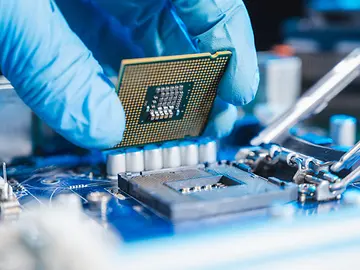
Water recycling is a special focus for parts of the semiconductor industry. For example, Taiwanese semiconductor company TSMC targets 90 % water recycling at its Arizona site.
Mining for metals and minerals is often highly water intensive. This challenge is frequently compounded by the fact that a significant proportion of mining operations are located in regions already facing water scarcity or water stress. Companies are, however, beginning to respond. Miner Rio Tinto, for example, reports that at its Gobi Desert operation it has invested in both water recycling and desalination. As a result, the site now uses roughly half the water consumed by certain peers operating in comparable conditions.
Since agriculture is responsible for the largest use of fresh water globally, it is a key target for innovative solutions. Digital sensors, smart metering, advanced filtration, and wastewater treatment technologies are being deployed worldwide to support more efficient water use.
Data centres in particular, and many manufacturing processes, are also significant users of water. Here new solutions like membrane-based desalination and closed-loop recycling are being used at certain facilities to reduce reliance on fresh-water.
While corporations are embedding water stewardship into strategic planning and reporting, regulators and governments are also responding. New policies and pricing mechanisms are increasing the visibility of water risk in countries, sectors, and supply chains. Governments are driving investment through regulation and infrastructure funding.
Achieving the United Nations Sustainable Development Goal (SDG) No. 6, i.e., clean water and sanitation, faces tough challenges, including pollution, ageing infrastructure, and insufficient investment. Infrastructure issues are a particularly big problem. Decades- or even century-old water pipes in developed markets frequently break or leak, causing enormous water loss and expense. Emerging markets face underdeveloped and overstretched supply networks. Pollution is exacerbating the challenge, as untreated wastewater and agricultural runoff contaminate existing supplies, increasing health and treatment costs.
While the size of the fresh-water problem can seem overwhelming, listed and unlisted markets including a growing range of companies and projects that offer technologies and services tailored to water efficiency, treatment and infrastructure.
LGT Wealth Management UK LLP is authorised and regulated by the Financial Conduct Authority Registered in England and Wales: OC329392. Registered office: 14 Cornhill, London, EC3V 3NR. LGT Wealth Management Limited is authorised and regulated by the Financial Conduct Authority. Registered in Scotland number SC317950 at Capital Square, 58 Morrison Street, Edinburgh, EH3 8BP. LGT Wealth Management Jersey Limited is incorporated in Jersey and is regulated by the Jersey Financial Services Commission in the conduct of Investment Business and Funds Service Business: 102243. Registered office: Sir Walter Raleigh House, 48-50 Esplanade, St Helier, Jersey JE2 3QB. LGT Wealth Management (CI) Limited is registered in Jersey and is regulated by the Jersey Financial Services Commission: 5769. Registered Office: at Sir Walter Raleigh House, 48 – 50 Esplanade, St Helier, Jersey JE2 3QB. LGT Wealth Management US Limited is authorised and regulated by the Financial Conduct Authority and is a Registered Investment Adviser with the US Securities & Exchange Commission (“SEC”). Registered in England and Wales: 06455240. Registered Office: 14 Cornhill, London, EC3V 3NR.
This communication is provided for information purposes only. The information presented is not intended and should not be construed as an offer, solicitation, recommendation or advice to buy and/or sell any specific investments or participate in any investment (or other) strategy and should not be construed as such. The views expressed in this publication do not necessarily reflect the views of LGT Wealth Management US Limited as a whole or any part thereof. Although the information is based on data which LGT Wealth Management US Limited considers reliable, no representation or warranty (express or otherwise) is given as to the accuracy or completeness of the information contained in this Publication, and LGT Wealth Management US Limited and its employees accept no liability for the consequences of acting upon the information contained herein. Information about potential tax benefits is based on our understanding of current tax law and practice and may be subject to change. The tax treatment depends on the individual circumstances of each individual and may be subject to change in the future.
All investments involve risk and may lose value. Your capital is always at risk. Any investor should be aware that past performance is not an indication of future performance, and that the value of investments and the income derived from them may fluctuate, and they may not receive back the amount they originally invested.