On 3 November 2026, US voters will elect representatives to all 435 House seats, 35 Senate seats and 36 governorships. Notably, these will be the first national midterm elections held during a president’s non-consecutive second term since 1894. That year, President Grover Cleveland’s Democratic Party suffered the largest House defeat in US history, losing more than 100 seats. Democrats also lost four Senate seats, ceding control of both chambers of Congress to the Republicans.
For investors, the question is less about what changes we will see in the chambers; rather, what will change in Washington and what won’t, and what the ramifications will be for global markets.
Republicans are currently defending narrow majorities in both chambers, holding roughly 218 House seats to the Democrats’ low 210s, alongside a 53–47 advantage in the Senate. Democrats need to win only a small number of Republican-held districts to regain control of the House and currently appear to have the advantage, supported by a mid-single-digit lead in the generic ballot. The Senate map is more favourable to Republicans, although contests in Georgia, Michigan, North Carolina and Texas remain competitive.
The most likely outcome is a divided government, with the Democrats controlling the House and the Republicans retaining the Senate and the White House. For markets, this configuration may matter more than the headline partisan result, as it would define the limits of policymaking in Washington for the following two years. The election takes place against a familiar midterm backdrop, in which the President’s party typically loses ground. This cycle is further shaped by affordability pressures, two government shutdowns earlier in 2026, and ongoing debates over tariffs, tax policy, inflation and Federal Reserve (Fed) independence. Significant geopolitical risks – including the wars in Iran and Ukraine – add to an already uncertain environment.
While a divided government is likely to constrain major legislation, changes in congressional committee leadership could still have important policy implications and in-turn, market implications. Areas particularly exposed include technology regulation, AI governance, data-privacy rules, energy policy and defence spending.
Midterm years have historically tested investors’ patience. Since the late 1930s, S&P 500 returns in midterm years have generally been lower and more volatile than in other years of the presidential cycle. Weakness has typically been concentrated in the first three quarters, followed by a stronger fourth-quarter recovery as political uncertainty recedes. Treasury yields have also tended to be more volatile during these periods.
The more encouraging pattern emerges after the election. Since 1938, the S&P 500 has risen in the 12 months following a midterm election in the vast majority of cases. Markets often begin to reflect the likely outcome around a month before polling day, once the electoral picture becomes clearer – one reason strategists generally caution against trading on the election itself.
The important caveat is that elections are only one of many market drivers, and historically less influential than corporate earnings, inflation and Fed policy. The market sell-offs during the 2018 and 2022 midterm years, for example, were driven primarily by Fed tightening rather than by election outcomes.
Tariffs and trade. The administration retains broad discretion over tariff policy, meaning trade remains a key source of uncertainty regardless of the congressional outcome. Although a Supreme Court ruling has limited one legal route for imposing emergency tariffs, other tools remain available, suggesting that tariff-related uncertainty is likely to extend into 2027.
Taxes and fiscal stimulus. Provisions in the 2025 reconciliation package are expected to result in sizeable tax refunds this year. A further package focused on affordability is reportedly under consideration, although its prospects may depend on bond-market tolerance for an already challenging fiscal outlook.
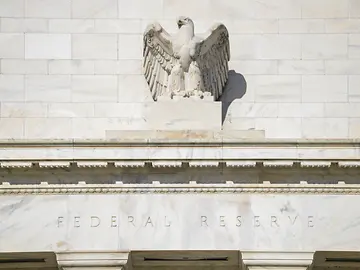
The Federal Reserve. With a new Fed Chair having succeeded Jerome Powell in mid-2026, concerns over central-bank independence, alongside elevated fiscal deficits and fluctuations in oil prices, have heightened expectations of bond-market volatility. Strategists are consequently bracing for a steeper yield curve and a weaker US dollar.
Government funding. Two government shutdowns have already occurred in early 2026. With appropriations disputes still unresolved, another funding confrontation remains a meaningful risk later this year.
Sector-specific scrutiny. Healthcare and pharmaceutical companies face pressure from tariffs, reference-pricing proposals and reimbursement changes. Private equity may face greater federal scrutiny, particularly in healthcare, housing and consumer-facing sectors. Digital assets could also attract increased congressional attention, notably around stablecoin regulation and custody requirements.
A Democratic-controlled House alongside a Republican Senate and White House would likely result in greater political gridlock: fewer major legislative initiatives, increased congressional oversight, and more contentious negotiations over government funding and the debt ceiling.
Historically, divided government has not necessarily been negative for equities, as reduced scope for legislative change can lower policy risk. However, it may increase the likelihood of periodic funding disputes, creating episodes of short-term market volatility. Most strategists expect the midterm elections to have limited influence on the broader forces already shaping markets, including tariffs, deregulation and geopolitics.
As investors approach the midterm elections, they will expect volatility, but not necessarily weaker overall returns, with the market drawdown so far in 2026 remaining below the historical average for midterm‑election years.
Rather than trading on the election result, it is worth noting that markets often price in the likely outcome before polling day, while historically the strongest returns have tended to follow the vote. In this context, the Fed and fiscal policy are likely to have a greater influence on market returns than which party controls the House, even as a divided government raises the potential for periodic funding disputes and heightened oversight.
Greater sector dispersion is to be expected, particularly across healthcare, private equity and digital assets, and autumn funding deadlines warrant close monitoring given the risk of renewed government‑shutdown or debt‑ceiling tensions. Taken together, these factors support a long‑term, diversified approach that looks through short‑term political noise rather than attempting to time the election itself.
LGT Wealth Management UK LLP is authorised and regulated by the Financial Conduct Authority Registered in England and Wales: OC329392. Registered office: 14 Cornhill, London, EC3V 3NR. LGT Wealth Management Limited is authorised and regulated by the Financial Conduct Authority. Registered in Scotland number SC317950 at Capital Square, 58 Morrison Street, Edinburgh, EH3 8BP. LGT Wealth Management Jersey Limited is incorporated in Jersey and is regulated by the Jersey Financial Services Commission in the conduct of Investment Business and Funds Service Business: 102243. Registered office: Sir Walter Raleigh House, 48-50 Esplanade, St Helier, Jersey JE2 3QB. LGT Wealth Management (CI) Limited is registered in Jersey and is regulated by the Jersey Financial Services Commission: 5769. Registered Office: at Sir Walter Raleigh House, 48 – 50 Esplanade, St Helier, Jersey JE2 3QB. LGT Wealth Management US Limited is authorised and regulated by the Financial Conduct Authority and is a Registered Investment Adviser with the US Securities & Exchange Commission (“SEC”). Registered in England and Wales: 06455240. Registered Office: 14 Cornhill, London, EC3V 3NR.
This communication is provided for information purposes only. The information presented is not intended and should not be construed as an offer, solicitation, recommendation or advice to buy and/or sell any specific investments or participate in any investment (or other) strategy and should not be construed as such. The views expressed in this publication do not necessarily reflect the views of LGT Wealth Management US Limited as a whole or any part thereof. Although the information is based on data which LGT Wealth Management US Limited considers reliable, no representation or warranty (express or otherwise) is given as to the accuracy or completeness of the information contained in this Publication, and LGT Wealth Management US Limited and its employees accept no liability for the consequences of acting upon the information contained herein. Information about potential tax benefits is based on our understanding of current tax law and practice and may be subject to change. The tax treatment depends on the individual circumstances of each individual and may be subject to change in the future.
All investments involve risk and may lose value. Your capital is always at risk. Any investor should be aware that past performance is not an indication of future performance, and that the value of investments and the income derived from them may fluctuate, and they may not receive back the amount they originally invested.