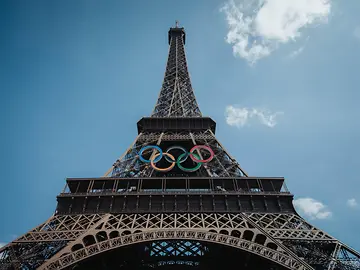
As the Milano Cortina 2026 Winter Olympics and Paralympics conclude, the Games raise familiar questions that follow almost every Olympic host: how much did they cost, and did the benefits outweigh the investment?
For decades, cities have competed fiercely for the prestige of hosting the Olympics, which promises economic growth, tourism booms and global visibility. Yet in recent years, enthusiasm to host has cooled. Costs have risen over time, and financial risks and environmental pressures have made the benefits less certain.
The most recent fixtures, including the Summer Games in Paris 2024 and Winter games in Milano Cortina 2026, suggest a different approach may be emerging. Both focused on sustainability, limiting large-scale construction and reusing existing infrastructure wherever possible, reflecting a broader shift in how cities and the International Olympic Committee (IOC) are thinking about future Olympics: less about building new facilities and more about adapting what already exists.
Before a city is even selected, preparing and submitting a bid to the IOC can cost between $50-$100 million. Once chosen, the city must prepare for the influx of athletes and tourists. These projects can improve roads, railways and airports for long-term public use,1 but the financial debt is often substantial. Montreal’s 1976 debt took 30 years to repay, for example, while Sochi’s infrastructure is expected to cost Russian taxpayers nearly $1 billion annually for the foreseeable future.2
Organisers typically highlight a range of potential benefits that offset these costs. Job creation is commonly cited, although the impacts can be temporary, with roles often going to workers already employed. The tourism effect is also mixed due to higher prices, crowding and security measures. In the case of Milano Cortina 2026, Italian officials hope improvements to transport links and Alpine cable-car networks will leave a lasting legacy for regional tourism and development.3
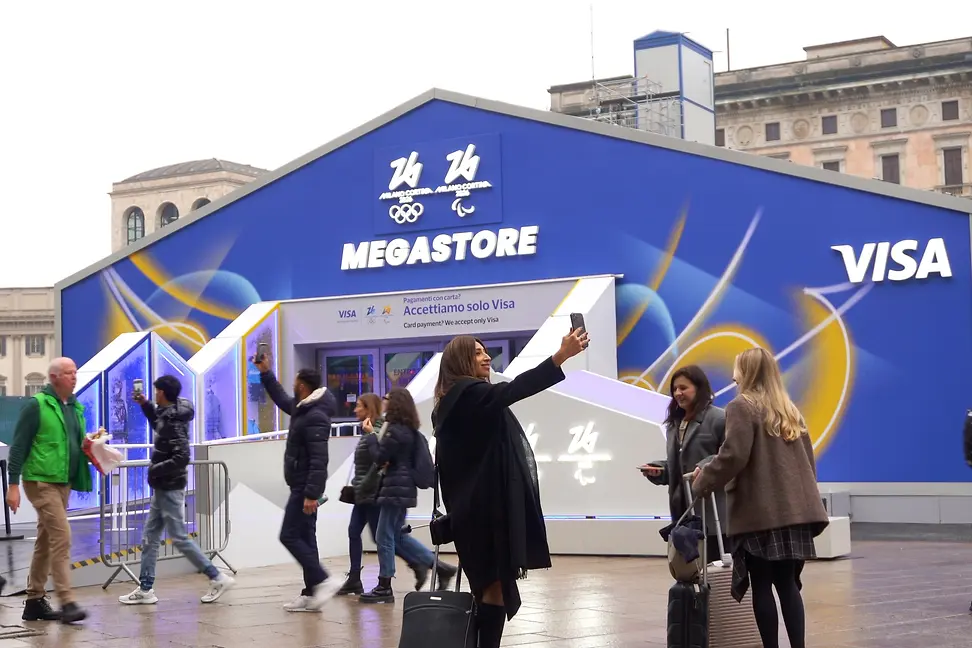
Measuring the overall economic impact is challenging. Some studies from the National Bureau of Economic Research suggest hosting the Games can increase international trade,4 while other economists have found little evidence of long-term effects on GDP.5 For Paris 2024, the estimated boost to GDP was around 0.07%. Milano Cortina 2026 is estimated to generate about $6.3 billion in immediate spending, slightly above the $6.2 billion budget, underlining how finely balanced the costs and benefits can be.
One key debate in Olympic economics is whether the Winter Games are less financially risky than the Summer Games. At first glance, the Winter Olympics appear much smaller: around 3,000 athletes compete in roughly 100 events, compared with over 10,000 athletes across 300 events in the Summer Games.
However, the specialised infrastructure required for winter sports – sliding tracks, ski jumps, and mountain transport networks – can make the Games particularly expensive. The 2014 Sochi Winter Olympics remain the costliest in history at an estimated $50 billion, due largely to building infrastructure from scratch and developing both coastal and mountain venues simultaneously.6 Similarly, the 2022 Beijing Winter Games cost an estimated $38.5 billion, including major investment in a high-speed driverless rail line connecting venues.7
Recent hosts, such as Paris and Milano Cortina, have increasingly focused on controlling costs, often with IOC support. The 2024 Paris Olympics centred on upgrading existing infrastructure rather than building new venues, and relied almost entirely on facilities previously used for events such as the French Open and the 2016 European Football Championship. Paris budgeted about $8 billion for the Games, and the French Court of Auditors later estimated total public spending at about $7.85 billion – far less than Tokyo 2020’s $13 billion or Rio 2016’s $20 billion.8
Similarly, Milano Cortina 2026 cost around $6.2 billion, one of the lowest in decades,9 partly due to two cities co-hosting events as well as reusing existing venues. Preparations were not without challenges: the Cortina sliding centre went over budget10 and Milan’s ice hockey venue faced delays.11 Yet compared with previous decades’ overspending, the IOC has highlighted both the Paris and Milano Cortina Games as examples of more sustainable hosting.
Future Winter Olympic Games may increasingly involve multiple host cities or broader regional partnerships, particularly as climate change reduces the number of reliable winter sports destinations. Research suggests that by the 2050s, only about 45 to 55 of the 93 locations that have previously hosted Winter Olympic events will remain climate-reliable.12
Some experts suggest expanding the geographic scope of future Games to entire regions like the Rocky Mountains in the United States and Canada, or the Tyrol region of the Alps, to help with snow reliability.13 Other proposals include rotating the Winter Olympics among climate-reliable host locations or shifting the schedule slightly earlier to improve snow conditions.14
The experiences of Paris 2024 and Milano Cortina 2026 suggest that the Olympic model may be evolving. Faced with rising costs, public scrutiny and environmental pressures, host cities are increasingly prioritising using existing venues, shared hosting arrangements and infrastructure projects that serve long-term public needs.
While the financial benefits remain debatable, these approaches reduce the risks that have discouraged many cities from bidding previously. By focusing on sustainability, regional cooperation and practical legacy planning, they may move away from billion-dollar mega-projects towards a more modest and sustainable model of hosting one of the world’s largest sporting events. What is not disputed however, is that the Olympics always inspires a spirit of international cooperation, comradery, healthy competition and national pride – which many would consider priceless.15
[1] The Economics of Hosting the Olympic Games | Council on Foreign Relations
[2] The Economics of Hosting the Olympic Games | Council on Foreign Relations
[3] Olympic infrastructure: the struggle to create a lasting legacy
[6] Sochi Winter Olympics 'cost billions more than estimated' - University of Birmingham
[7] Beijing 2022 may cost more than US$38.5bn, says report - SportsPro
[8] The Economics of Hosting the Olympic Games | Council on Foreign Relations
[9] The Economics of Hosting the Olympic Games | Council on Foreign Relations
[10] Inside The Games • Milano Cortina admits overruns, backs legacy
[11] How Italy Is Struggling to Finish an Ice Rink Before the Olympics - The New York Times
[12] To survive warming winters, the Olympics will need to change » Yale Climate Connections
[13] To survive warming winters, the Olympics will need to change » Yale Climate Connections
[14] To survive warming winters, the Olympics will need to change » Yale Climate Connections
LGT Wealth Management UK LLP is authorised and regulated by the Financial Conduct Authority Registered in England and Wales: OC329392. Registered office: 14 Cornhill, London, EC3V 3NR. LGT Wealth Management Limited is authorised and regulated by the Financial Conduct Authority. Registered in Scotland number SC317950 at Capital Square, 58 Morrison Street, Edinburgh, EH3 8BP. LGT Wealth Management Jersey Limited is incorporated in Jersey and is regulated by the Jersey Financial Services Commission in the conduct of Investment Business and Funds Service Business: 102243. Registered office: Sir Walter Raleigh House, 48-50 Esplanade, St Helier, Jersey JE2 3QB. LGT Wealth Management (CI) Limited is registered in Jersey and is regulated by the Jersey Financial Services Commission: 5769. Registered Office: at Sir Walter Raleigh House, 48 – 50 Esplanade, St Helier, Jersey JE2 3QB. LGT Wealth Management US Limited is authorised and regulated by the Financial Conduct Authority and is a Registered Investment Adviser with the US Securities & Exchange Commission (“SEC”). Registered in England and Wales: 06455240. Registered Office: 14 Cornhill, London, EC3V 3NR.
This communication is provided for information purposes only. The information presented is not intended and should not be construed as an offer, solicitation, recommendation or advice to buy and/or sell any specific investments or participate in any investment (or other) strategy and should not be construed as such. The views expressed in this publication do not necessarily reflect the views of LGT Wealth Management US Limited as a whole or any part thereof. Although the information is based on data which LGT Wealth Management US Limited considers reliable, no representation or warranty (express or otherwise) is given as to the accuracy or completeness of the information contained in this Publication, and LGT Wealth Management US Limited and its employees accept no liability for the consequences of acting upon the information contained herein. Information about potential tax benefits is based on our understanding of current tax law and practice and may be subject to change. The tax treatment depends on the individual circumstances of each individual and may be subject to change in the future.
All investments involve risk and may lose value. Your capital is always at risk. Any investor should be aware that past performance is not an indication of future performance, and that the value of investments and the income derived from them may fluctuate, and they may not receive back the amount they originally invested.
Suzy Waite is a Senior Investment Writer at LGT Wealth Management, covering macroeconomic events, geopolitics and financial markets. She was previously a journalist for 14 years working in New York, London and Hong Kong, and most recently at Bloomberg, where she covered hedge funds and asset management. She also worked at Haymarket Media and Euromoney Institutional Investor where she focused on asset management, commodities and equity capital markets.